When it comes to cycling, regular bike maintenance is key to ensuring a smooth, safe, and enjoyable ride. Whether you’re a daily commuter, a weekend warrior, or an occasional rider, taking care of your bike can extend its life, enhance performance, and save you money on repairs in the long run. In this blog post, we’ll cover essential bike maintenance tips that every cyclist should know.
1. Regular Cleaning
One of the simplest yet most effective maintenance tasks is keeping your bike clean. Dirt, grime, and road salt can accumulate on your bike’s components, causing wear and tear over time. Here’s how to clean your bike properly:
•What You Need: A bucket of soapy water, a sponge, a soft brush, and a cloth.
•How to Clean: Start by rinsing off any loose dirt with water. Use the soapy water and sponge to wash the frame, wheels, and other components. Use a brush to get into hard-to-reach areas, like the drivetrain. Rinse thoroughly and dry with a cloth.
•Tip: Avoid using high-pressure hoses as they can force water into bearings and other sensitive areas, potentially causing damage.
2. Check and Inflate Tires
Properly inflated tires are crucial for a safe and comfortable ride. Under-inflated tires can make pedaling harder and increase the risk of flats, while over-inflated tires can reduce traction and comfort.
•How to Check: Press your thumb against the tire. It should feel firm but with a little give. Use a tire gauge for an accurate pressure reading.
•Recommended Pressure: Check the sidewall of your tire for the recommended pressure range. Typically, road bikes need 80-130 psi, while mountain bikes require 30-50 psi.
•Regularity: Check tire pressure at least once a week or before every ride if you cycle frequently.
3. Lubricate the Chain
A well-lubricated chain is essential for a smooth ride and to prevent premature wear of your drivetrain components.
•How to Lubricate: Clean the chain with a degreaser first to remove old oil and dirt. Apply a bike-specific lubricant to the chain while turning the pedals backward, ensuring each link gets covered. Wipe off any excess lube with a cloth to prevent attracting dirt.
•How Often: Lubricate your chain every few rides, or after riding in wet or muddy conditions.
4. Inspect Brakes
Your brakes are vital for safety, so regular inspection is a must.
•What to Check: Ensure the brake pads are not worn out and are aligned correctly with the rim. The brake levers should engage before they touch the handlebar, and the cables should be free of fraying or rust.
•How to Adjust: If the brakes feel loose or aren’t stopping you effectively, adjust the tension using the barrel adjuster on the brake lever or caliper.
•When to Replace: Replace brake pads if they’re worn down to 1/4 inch or less.
5. Tighten Bolts and Check Alignment
Loose bolts can lead to poor performance or even accidents. Periodically check that all bolts on your bike, including those on the stem, handlebars, seat post, and wheels, are properly tightened.
•What You Need: A set of Allen keys and a torque wrench.
•How to Check: Use the torque wrench to ensure bolts are tightened to the manufacturer’s recommended specifications.
•Wheel Alignment: Spin your wheels to make sure they’re true and not wobbling. If you notice any misalignment, it might be time for a professional wheel truing.
6. Regular Professional Servicing
While many maintenance tasks can be done at home, it’s also important to have your bike professionally serviced at least once or twice a year. A professional tune-up can catch issues that are easy to overlook and ensure your bike is in top condition.
•What’s Included in a Service: A full professional service usually includes a thorough inspection, lubrication, adjustment of gears and brakes, and wheel truing.
•E-Bikes: If you own an e-bike, professional servicing is even more critical due to the additional components like the motor and battery.
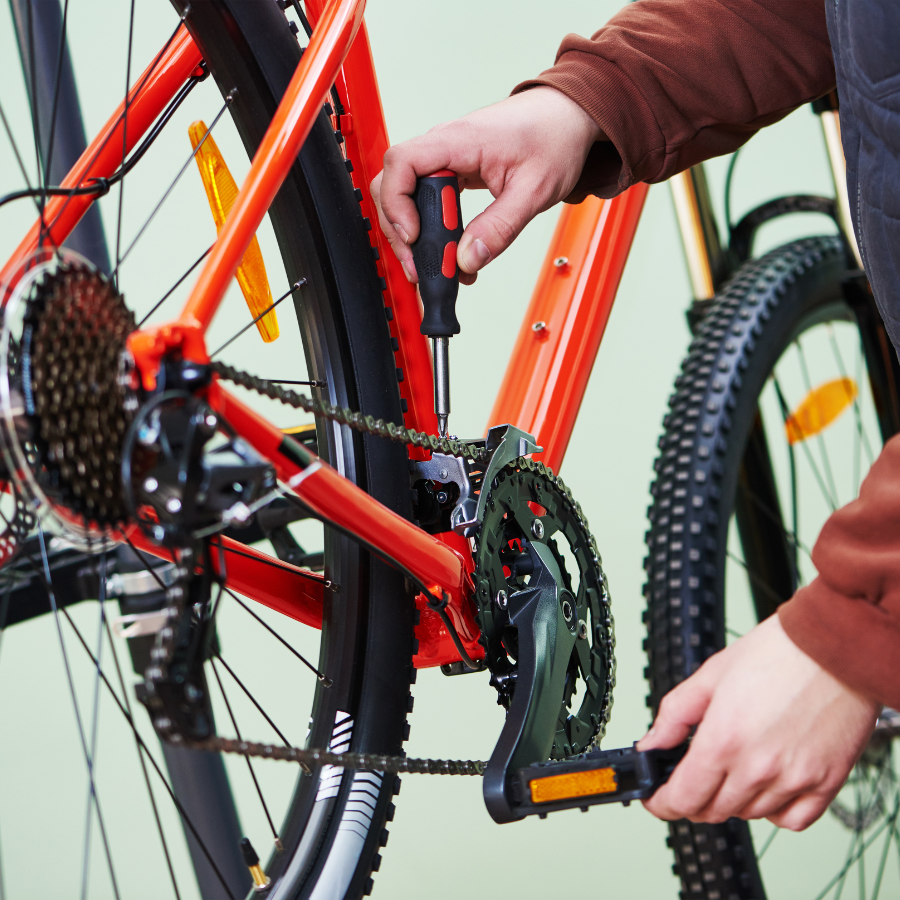
7. Check Gears and Drivetrain
Smooth gear shifting is crucial for an efficient ride, especially on varied terrain.
•How to Check: Shift through all the gears to make sure they’re engaging smoothly without skipping or making excessive noise.
•When to Adjust: If gears are not shifting smoothly, you might need to adjust the cable tension using the barrel adjuster on the derailleur.
•Drivetrain Wear: Regularly inspect the chain, cassette, and chainrings for signs of wear. A worn-out chain can cause poor shifting and damage other drivetrain components.
Final Thoughts
Routine maintenance is the best way to keep your bike running smoothly and ensure a safe riding experience. By following these basic maintenance tips, you can prevent many common issues and enjoy a more reliable ride. Remember, if you’re ever unsure about performing a maintenance task, it’s always a good idea to bring your bike to a professional workshop for assistance.
At Future Cycles Workshop London, we’re here to help with all your bike maintenance needs. Whether it’s a quick tune-up or a full overhaul, our expert mechanics are ready to get you back on the road in no time. Happy riding!